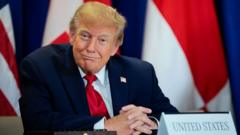
President Trump has asked South Korea to pay $10 billion as part of ongoing negotiations with North Korean leader Kim Jong Un. The demand, which surfaced during high-level talks, threatens to complicate a long-standing alliance and raises questions about the future of regional security.
Why the figure matters
The $10 billion request is not tied to a specific program or budget line, according to officials familiar with the discussions. It appears to be a broad ask, possibly linked to the costs of maintaining U.S. troops on the Korean Peninsula or to offset expenses related to denuclearization efforts. South Korea has not publicly responded, but the figure dwarfs previous cost-sharing agreements, which have typically been negotiated in smaller, annual increments.
The demand comes at a delicate moment. Trump has repeatedly touted his personal relationship with Kim, and the two leaders have met several times. Yet the financial request could inject friction into that process, especially if Seoul views it as a precondition for continued diplomatic engagement.
Strain on an alliance
U.S.-South Korea relations have weathered trade disputes and disagreements over defense costs before, but a $10 billion ask is on another scale. Analysts within the region say the move could be seen as a test of loyalty, forcing Seoul to choose between paying up or risking a slowdown in security cooperation. South Korean officials have historically resisted large, unilateral demands, preferring negotiated, transparent agreements.
The timing is also awkward. Talks with Kim are meant to reduce tensions, but a public financial dispute with a key ally could send mixed signals. If South Korea balks, it could embolden North Korea to drive a wedge between Washington and Seoul, a scenario that has long worried regional strategists.
Military readiness at risk
The $10 billion demand could also affect how quickly U.S. forces in the region are prepared for any contingency. South Korea hosts roughly 28,000 U.S. troops, and their presence is funded through a combination of U.S. defense spending and host-nation contributions. If the demand leads to a stalemate, some operational activities could be delayed, though both sides have mechanisms to avoid disruptions in the short term.
North Korea's military posture remains a constant concern. While Kim has shown willingness to talk, his forces continue to develop missiles and other capabilities. A breakdown in the U.S.-South Korea financial relationship would not automatically weaken the alliance, but it could slow joint exercises and intelligence sharing, which are central to deterrence.
The demand is still being processed through diplomatic channels. No formal proposal has been tabled, and South Korea's president has not yet issued a public statement. But the number alone is enough to shift the conversation from denuclearization to money.
The next few weeks will show whether Seoul offers a counter-proposal, pays up, or tries to decouple the demand from the broader security dialogue. That answer could determine not just the fate of the $10 billion, but also the tone of the next round of talks with Kim.