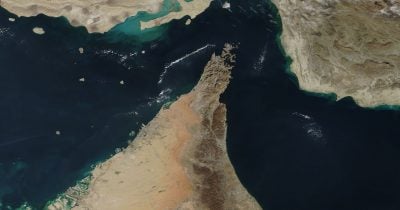
Iran's conflict has brought the Strait of Hormuz to a near standstill, with traffic collapsing and roughly half of the world's seaborne oil now unable to pass. The disruption is feeding directly into global inflation, putting central banks in a tougher spot and reshuffling energy market dynamics across the board.
The Strait Under Pressure
For years, the strait has been the world's most critical oil gateway, carrying about a fifth of total global petroleum consumption. Now, with hostilities escalating, shipping activity has plummeted. Tankers that would normally queue for passage are sitting idle or rerouting to longer, costlier paths.
The collapse is immediate and physical. The facts on the ground are stark: nearly half of global oil flows have been severed, and there is no sign of a quick return to normal. The strait, squeezed between Iran and Oman, has become a bottleneck that no one can navigate safely.
In response, shipping companies are holding off on new bookings. Energy traders are paying premiums for vessels that can still move, but the volume simply isn't there. The strait's strategic role as a reliable corridor is now in question.
Inflation's New Spark
The oil squeeze is hitting at a moment when inflation was already elevated in major economies. With supply choked off, fuel prices are climbing again, feeding into the cost of everything from transportation to manufacturing. This isn't a supply shock that fades in a month; it's a persistent pressure on the price level.
Households in importing countries are feeling it first. But the effect spreads outward. For any economy that relies on imported energy, the math gets harder: the same barrel of oil costs more, and the cost of moving goods rises accordingly.
The timing could not be worse. Many central banks have been hoping to cool price pressures by raising interest rates. The oil shock undermines that effort. As the cost of energy rises, the cost of living rises with it, and the trade-off between fighting inflation and supporting growth becomes starker.
Central Banks in a Bind
For policymakers, the war has introduced a supply-side shock that monetary tools can't easily offset. A rate hike might trim demand, but it won't unblock the strait. The real problem is physical: the barrels aren't moving, and that's a problem interest rates can't solve.
Inflation expectations are creeping up again, and that's dangerous. If businesses and consumers start to believe that high prices are the new normal, they act accordingly, and the wage-price spiral tightens. Central banks may have to respond, but they'll be doing so into a slowing global economy.
The shift is also changing how energy markets themselves operate. Traders are price in a longer-term risk premium on oil. The market's faith in stable supply chains is broken, and that faith won't return overnight even if the fighting ends.
The Global Economic Fallout
No economy is isolated. Oil importing nations face higher import bills and squeeze on household budgets. The developing world is particularly exposed, as fuel costs eat into food prices and everyday goods. The combination of war and inflation is a double hit.
There are also signs of a structural shift: some buyers are looking for alternative sources, but they're limited. The strait remains the route for a huge share of the world's oil, and no substitute exists at that scale.
The longer the disruption goes, the deeper the damage to the global economy. Supply chains that rely on just-in-time deliveries now face unpredictable delays, and energy-intensive industries are the first to feel the pinch.
The war has rewritten the near-term outlook for oil markets. What was a fragile balance has become a seller's market, and the pressure is on both the conflict and the energy infrastructure that's caught in the middle. The question now is how long the strait stays blocked, and how much higher the price will go before it reopens.