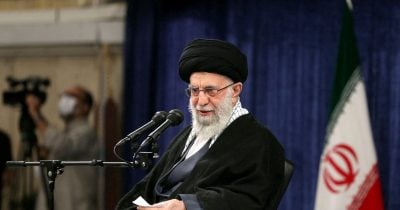
Russian President Vladimir Putin has offered to store Iran's enriched uranium on Russian territory, a proposal that could give Moscow a central role in defusing the long-running standoff between Tehran and Washington. The offer, made public amid heightened US-Iran tensions, touches on one of the most sensitive aspects of Iran's nuclear program: the stockpile of enriched material that Western nations fear could be used to build a bomb.
A potential buffer for nuclear tensions
Under the proposal, Iran would ship its enriched uranium to a facility in Russia, effectively removing the material from Iranian control. That arrangement would address a key demand of the international community — ensuring that Iran's enriched uranium remains under strict monitoring and cannot be diverted for military purposes. For Washington, which has accused Iran of inching toward weapons-grade enrichment, the plan could serve as a verifiable safeguard. The idea is not entirely new: a 2015 deal with Iran, the Joint Comprehensive Plan of Action, allowed for a similar transfer of enriched uranium to Russia in exchange for raw uranium. That deal collapsed after the US withdrew in 2018, and tensions have only escalated since.
Russia's diplomatic calculus
Moscow's offer positions Putin as a potential mediator between two adversaries with whom he maintains working relationships. Russia has long sought to play a balancing role in the Middle East, keeping channels open with both Iran and the West. By offering to host Iran's enriched uranium, Putin could strengthen his hand in nuclear non-proliferation talks while also bolstering his image as a statesman in a volatile region. The move also carries economic and strategic incentives: it would give Russia direct oversight of a chunk of Iran's nuclear supply chain and deepen its influence over Tehran's atomic program.
What the proposal means for non-proliferation
Storing enriched uranium on Russian soil would not reduce Iran's enrichment capacity — Tehran could still produce new material — but it would cap the stockpile that exists today. For non-proliferation advocates, that cap is crucial. It buys time for diplomacy and reduces the risk that a sudden political shift in Tehran could put large quantities of enriched uranium into weaponization. The proposal also sidesteps the prickly issue of sending the material out of the region entirely, which Iran has historically resisted. Russia offers a destination that is geographically close to Iran and politically palatable to both Tehran and the West.
Unanswered questions
It is unclear whether Iran will accept the offer. Tehran has in the past balked at shipping its enriched uranium abroad, viewing it as a loss of sovereignty and a bargaining chip. The United States has not publicly reacted to the proposal, but any deal that keeps enrichment limits in place without a broader agreement is likely to face scrutiny from hardliners on both sides. The proposal now awaits a response from Tehran and Washington. Whether Iran agrees to the plan and how Washington responds will determine if this proposal moves beyond words.